Last updated: November 20, 2026
Quick answer: For How to Budget for Cash Withdrawal Costs as a Single Parent, set aside 1 planned cash-withdrawal line in your monthly budget, and expect that each extra ATM trip can add a fee. Budget cash withdrawal costs the same way you budget food or gas: make room for the fee, cut back on avoidable trips to the ATM, and keep a small cash reserve so one extra withdrawal does not wreck the week. How to Budget for Cash Withdrawal Costs as a Single Parent starts with a simple rule: plan for cash needs before you need cash. Cash withdrawals are part of the budget when a household still needs physical money for school lunches, haircuts, field trips, tips, or a cash-only store.
Key takeaways
- Treat ATM charges as a regular expense, not an emergency, and if your banking setup is unusual, check with your bank or a financial professional; the CFPB explains that ATM fees can apply when you use an out-of-network machine.
- Use in-network ATMs and bank branches first when cash is needed.
- Cash-back at checkout can be cheaper than a separate withdrawal, but it may still carry a cost or require a purchase.
- A small cash reserve reduces last-minute trips and the fees that come with them.
- Withdrawal limits can change the timing of your cash plan, even when your balance is enough.
How do cash withdrawal costs fit into a single-parent budget?
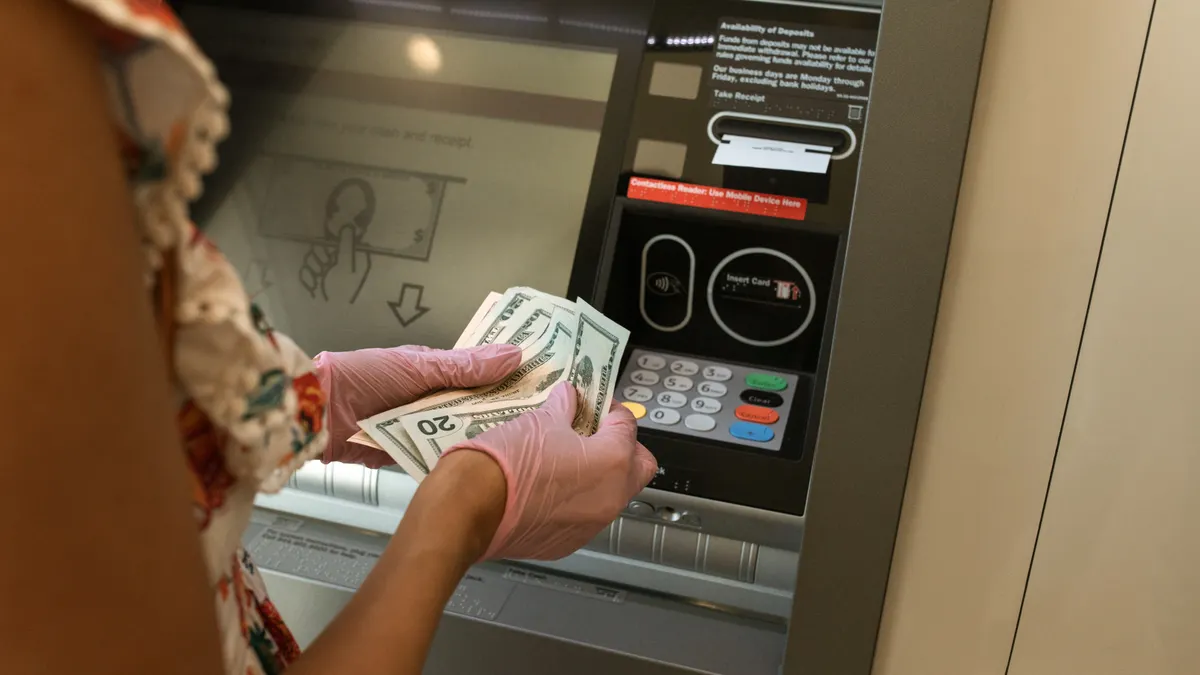
Cash withdrawal costs fit into a single-parent budget as a small, repeat expense that should sit beside groceries, transit, and school costs. The goal is not to guess the exact fee every time. It is to assume there may be a surcharge, then plan your cash use so you are not paying extra more often than needed.
A generic budget often misses the habit cost of cash-only spending. One $3 or $4 ATM fee may look minor, but a few extra trips in a month can steal money from food or diapers. That is why this expense belongs in the same planning bucket as other frequent costs, even though it is not a bill.
Because cash withdrawal costs repeat, the budget works best when it answers three questions: how often cash is needed, where the cash will come from, and what fee is likely attached. If the answer is “every week,” the budget should assume weekly withdrawals, not random ones. If the answer is “sometimes at a store register,” the budget should include cash-back as one possible route, not the default.
This article fits the broader single-parent banking and payment-cost topic, but it stays focused on cash withdrawals only. It does not cover money orders, cashier’s checks, peer-to-peer transfer fees, or replacement card costs. For related planning, see the single-parent banking guide and the cash-back at checkout guide.
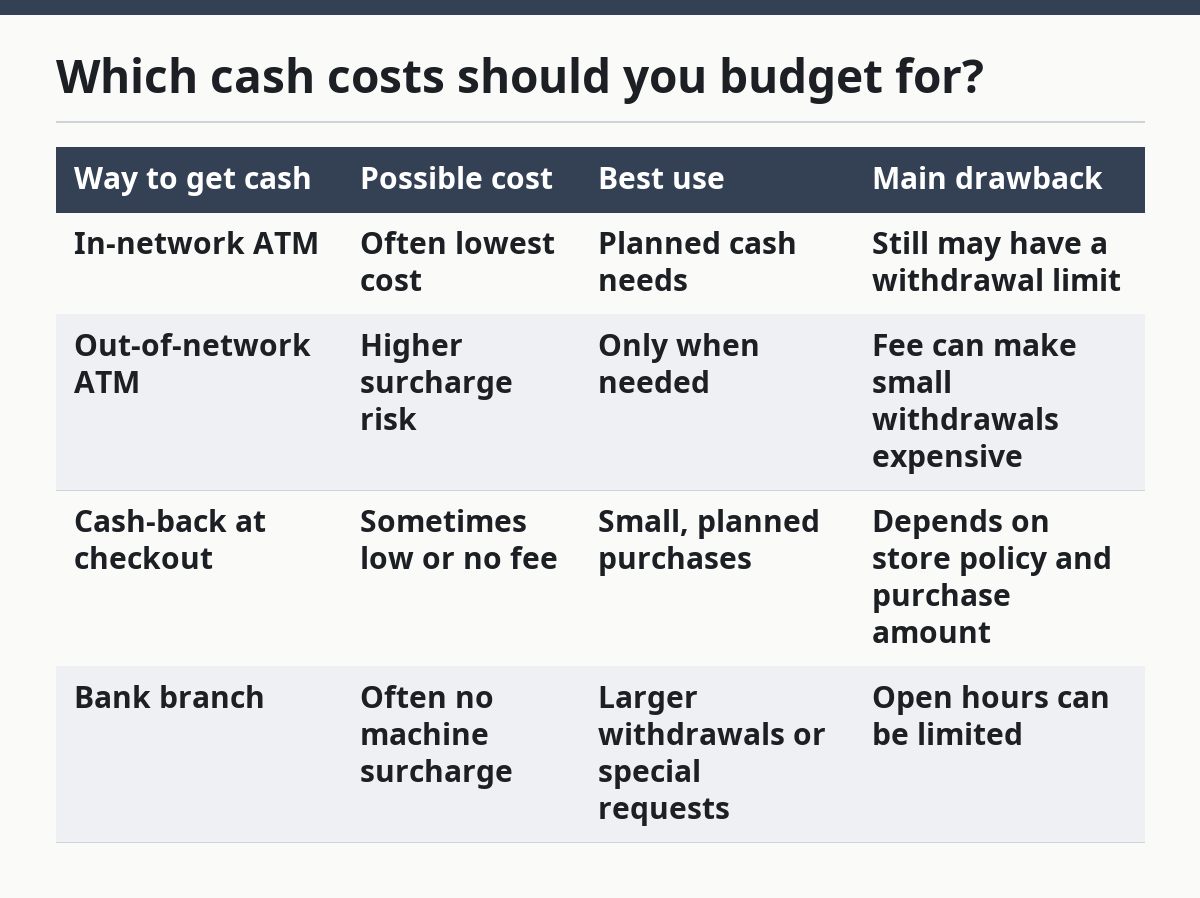
Which cash costs should you budget for?
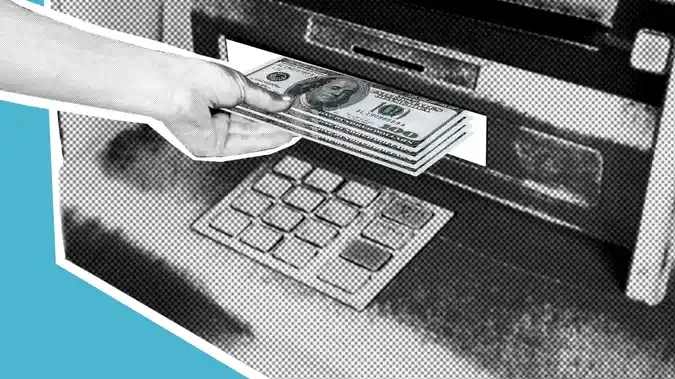
You should budget for the surcharge, the cash-back fee if one applies, and the cost of making extra trips to get cash. The main cost is usually the ATM surcharge, which can come from the machine owner, your bank, or both. A bank branch may help avoid some of these costs, although branch access is not always convenient.
Here is the practical comparison:
| Way to get cash | Possible cost | Best use | Main drawback |
|---|---|---|---|
| In-network ATM | Often lowest cost | Planned cash needs | Still may have a withdrawal limit |
| Out-of-network ATM | Higher surcharge risk | Only when needed | Fee can make small withdrawals expensive |
| Cash-back at checkout | Sometimes low or no fee | Small, planned purchases | Depends on store policy and purchase amount |
| Bank branch | Often no machine surcharge | Larger withdrawals or special requests | Open hours can be limited |
Cash-only expenses deserve a line in the budget because they force cash into your week whether you want it or not. Examples include a school fundraiser, a tip jar, a local service that does not take cards, or a child’s activity that wants exact bills. If those costs show up every month, a cash reserve is cheaper than repeated emergency withdrawals.
The trade-off is simple: holding a little cash can reduce fees, but too much cash at home is easy to lose and hard to track. A small reserve solves the fee problem without turning the budget into a pile of loose bills. For practical budgeting, the budgeting basics page can help you fit the reserve into a monthly plan.
How do you build the budget step by step?
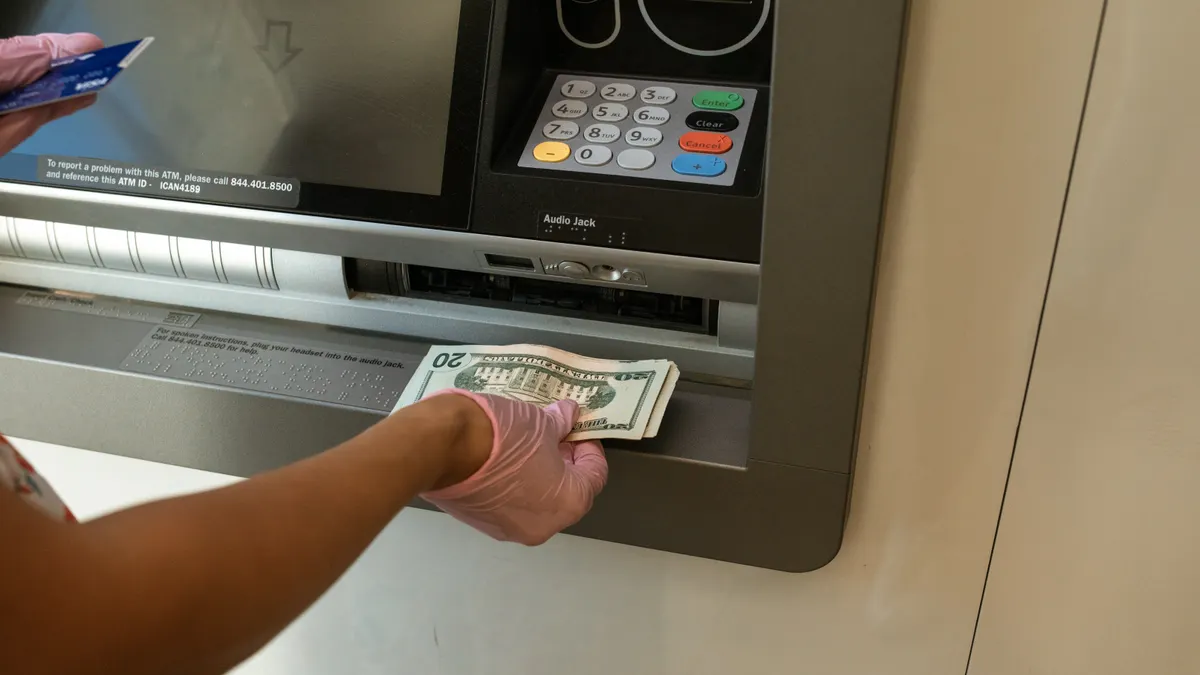
One way to build the budget is by mapping cash needs, choosing the cheapest withdrawal route, and setting aside a small cushion for fees. The process is easier when it is done in the same order every month, because the pattern shows where money leaks out.
- List your cash-only expenses on paper or in a notes app for a 30-day month, then mark which ones are weekly, monthly, or occasional.
- Check your bank app for your ATM and withdrawal limit before you leave home, so you know whether one trip can cover the need.
- Choose the cheapest source first: in-network ATM, then bank branch, then cash-back at checkout if the store offers it.
- Set a cash reserve in a separate envelope, wallet pocket, or other simple place so you do not need an extra trip for every small purchase.
- Add a fee cushion to the budget line for cash withdrawals, so an unexpected surcharge does not come out of groceries.
- Review the month at the end and count how many withdrawal trips you made, then decide whether one larger withdrawal would have cost less.
A simple example helps. If cash is needed for school lunch days, a child-related fee, and one cash-only purchase, one planned withdrawal may beat three separate trips. If the bank’s withdrawal limit is lower than the amount needed, a bank branch can be the cleaner option because it may let you take out more in one visit. For a related comparison, see ATM fee tips and single-parent money planning.
The method does not work as well for someone who uses cash only once or twice a year. In that case, the effort of keeping a reserve may not be worth it, especially if the nearest in-network ATM is already convenient.
How can you cut ATM fees without messing up your week?
You can cut ATM fees by using in-network machines, timing withdrawals to reduce trips, and replacing tiny withdrawals with one planned cash-back stop. The first move is usually the easiest: use the ATM network your bank already supports, because that is the most direct way to avoid a surprise surcharge. The CFPB and FDIC both explain that ATM costs and access can vary by institution and location, so checking your own bank’s rules matters. See the Consumer Financial Protection Bureau and the FDIC.
A few habits matter more than people expect. Taking out $20 three times in a week can be more expensive than one planned withdrawal, because each trip can trigger a fee. If your bank has a withdrawal limit, plan around it instead of making another run later in the week.
Cash-back at checkout can help when you are already buying diapers, milk, or lunch items. It works best for small amounts and only when the purchase is already necessary. It may still be cheaper than a separate withdrawal, but it is not always free, and it is not the cheapest option if the store raises the basket total just to make the cash-back trip feel “free.”
The honest drawback is convenience. In-network ATMs are not always near school pickup, work, or home. A bank branch may still be the better move for a larger amount, even if it takes more time, because one trip can beat two or three small withdrawals.
What cash habits save the most money?
The cash habits that save the most money are planning ahead, keeping a small reserve, and avoiding impulse withdrawals. The main habit cost is not the fee itself; it is the extra trip that happens when cash runs out at the wrong time. That is where a budget starts to lose money in small pieces.
A cash reserve should be small enough to feel safe and useful, not so large that it becomes untracked spending. For many families, the point is to have enough to cover a short gap until the next planned withdrawal. The reserve acts like a buffer between a child’s activity fee and the nearest ATM.
Because cash use often repeats on a schedule, a second useful habit is to connect cash use to known weekly events. If school lunch money, a bus fare, or a cash-only errand always appears on the same day, cash can be pulled in one trip instead of three. That makes the withdrawal limit easier to work around, too.
Another habit is to write the withdrawal down right away. A budget cannot stay honest if cash leaves the wallet without a record. The amount does not need a fancy system; a simple line in a notebook is enough.
What mistakes make cash withdrawals more expensive?
The biggest mistake is treating each cash need as a separate emergency. That often leads to more ATM visits, more surcharges, and more chances to hit a withdrawal limit at the wrong time. One extra trip may not feel serious, but repeated trips do real damage over a month.
A second mistake is forgetting that out-of-network ATMs can carry more than one fee. That can make a small withdrawal an expensive choice. If the machine is not in your bank’s network, the “quick stop” may cost more than waiting until you can reach a bank branch or a known in-network ATM.
A third mistake is keeping no cash reserve at all. That leaves only two choices: pay the fee now or skip the purchase. For a single parent, that can turn a small cash-only expense into a stressful last-minute problem.
This is not a system for someone who wants zero cash in the house. It is for a household that still uses physical money and wants to control the cost of getting it. For readers who need help with other banking costs, the hub on single-parent banking, payment, and money transfer costs is the right next stop. For more on fee comparisons, see bank branch and ATM access and cash-only budgeting.
Sources worth checking for fee basics include the Consumer Financial Protection Bureau on ATM fees and the FDIC on ATM and branch access. Those organizations publish consumer guidance that can help explain what fees and limits mean in practice.
How do i reduce atm fees?
Use an in-network ATM first, because that is the simplest way to avoid a surcharge. If the amount needed is small, cash-back at checkout may be a better fit, but only if the store does not add a cost that makes the trip more expensive.
The other fix is fewer withdrawals. One planned trip usually costs less than several small ones, especially when a withdrawal limit forces a second visit.
Should i budget for cash-only purchases?
Yes, because cash-only purchases can force extra withdrawals at the worst time. A small line in the budget for cash use keeps those costs visible instead of letting them drain the grocery money.
This matters most when the same cash-only costs show up every month, such as school events, tips, or local services that do not take cards. A cash reserve helps here, because it cuts the need for emergency ATM trips.
What is the cheapest way to get cash?
The cheapest way to get cash is usually to use an in-network ATM or a bank branch that does not add a surcharge. If a store offers cash-back with a purchase you already needed to make, that can also be a low-cost option.
The wrong choice is often the nearest out-of-network machine, especially for a small withdrawal. A quick stop can be the most expensive one if the fee is bigger than the cash you were trying to get.
FAQ
How much should I set aside for cash withdrawal costs?
Set aside at least one fee line in the monthly budget, then adjust it after a month or two if your bank charges more or less than expected. If you withdraw cash every week, the line item should reflect that pattern.
Is cash-back always cheaper than an ATM?
No. Cash-back can be cheaper, but it is not always free and it may require a purchase. Use it when the store policy and your receipt total make sense.
Can a bank branch save me money?
Sometimes. A branch may avoid a machine surcharge, but branch hours and travel time can make it less convenient. That is why the cheapest option is not always the most practical one.
How often should a single parent withdraw cash?
As infrequently as possible without leaving the household short. If you can combine needs into one planned trip, that usually works better than several small withdrawals.
What if my bank has a withdrawal limit?
Plan around the limit before you leave home. If the limit is too low for one trip, a bank branch or another planned withdrawal route may be better.
Drafted with AI; not yet reviewed by a person.