Last updated: August 11, 2026
- A common starter target is $500 to $1,000 for small emergencies, then a larger cushion over time.
- credit card balances alone were $1.12 trillion in Q1 2024 (https://www.federalreserve.gov/releases/g19/current/).
- household debt balances reached $17.69 trillion in Q1 2024 , which is why interest costs matter so much in family budgets (https://www.federalreserve.gov/releases/g19/current/).
- For saving, I would define what the money is for.
Quick Answer: For most readers of this saving, debt, sinking funds — complete guide, the first move is to keep at least $500 to $1,000 ready for surprises, then send extra money toward the priciest problem. Tax issues, secured debt, or irregular income? Bring in a qualified financial professional before you change course; the Consumer Financial Protection Bureau recommends getting help when debt, budgeting, or repayment choices get complicated (https://www.consumerfinance.gov/consumer-tools/debt-collection/).
You have extra money, and the choice can feel oddly personal: save it, or crush debt? The better question is sharper — how do I keep today’s bills, future expenses, and expensive debt from fighting each other? I spend a lot of time writing about that exact mess because readers often feel one flat tire away from panic. This is information, not financial advice; for your own situation, especially if you have tax issues, secured debt, or irregular income, speak with a qualified adviser. The CFPB also says people under debt or budgeting stress can benefit from professional guidance (https://www.consumerfinance.gov/consumer-tools/budgeting/).
My answer is blunt: use saving for short-term stability, debt reduction for high-cost borrowing, and sinking funds for expenses you know are coming but not due yet. Most people do not need a fancier setup. They need a clearer one.
The Real Difference Between Saving and Debt and Sinking Funds
Saving, debt, and sinking funds all move your cash around, but they do it for different reasons.
Saving is money you hold back for flexibility. It catches you when life gets messy: a car repair, a job gap, a medical co-pay, a broken appliance, a delayed paycheck. The point is not top returns. The point is options. A common starter target is $500 to $1,000 for small emergencies, then a larger cushion over time.
Debt is borrowed money you must repay, usually with interest and often with penalties if you miss payments. Some debt is manageable and even useful in context, but expensive balances quietly drain future cash. Every payment you make toward that debt is money that no longer has to be spent on interest later. The Federal Reserve has reported that U.S. household debt balances reached $17.69 trillion in Q1 2024, which is why interest costs matter so much in family budgets (https://www.federalreserve.gov/releases/g19/current/).
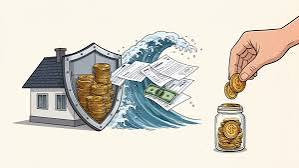
Sinking funds are planned mini-savings buckets for expenses that are not monthly, but are predictable. Think car insurance, holiday spending, annual subscriptions, back-to-school costs, home maintenance, or a travel trip you already know you will take. A sinking fund is not an emergency fund. Not even close. It is for the expected, just not every month.
That distinction matters because generic advice usually flattens everything into “save more” or “pay off debt first.” That misses the point. Skip the separation, and you can end up raiding emergency money for a holiday, putting a dental bill on a credit card, or throwing every spare dollar at debt while your annual insurance payment sneaks up on you. Sneaky little budget goblin.
Here is the cleanest way I think about it:
- Saving protects you from surprises.
- Debt reduction protects you from interest and repayment stress.
- Sinking funds protect you from predictable spending spikes.
That is the whole framework. The hard part is knowing which bucket gets your next dollar.
Saving: Who Should Actually Use This and Who Shouldn’t

Saving comes first for anyone whose cash flow is fragile. One unexpected bill would push you into debt, overdraft fees, or missed payments? Savings is the first line of defense. Not because saving is glamorous, but because it keeps one bad week from becoming a long repayment cycle.
The strongest case for saving is a basic emergency fund. Keep it easy to reach, separate from day-to-day spending, and boring on purpose. I would keep it boring because the job of emergency savings is not growth; it is availability. A savings account at an insured bank or credit union is the usual fit, though account rules, deposit insurance, and interest treatment vary by country, so check the details with your bank or a licensed adviser before you rely on a specific setup. The FDIC explains that deposit insurance covers deposits up to the standard insurance amount per depositor, per insured bank, for each account ownership category (https://www.fdic.gov/deposit/deposits/).
Saving also makes sense when the expense is near-term and certain. Rent due, tax payments coming, tuition in a few months, car registration every year — the money should sit where you can reach it. A sinking fund is a form of saving, but the purpose is narrower: it keeps planned expenses from wrecking your monthly budget.
The trade-off is real: cash sitting still may lose purchasing power over time because of inflation, and it is not built to beat investments. That is not a reason to avoid savings; it is a reason to keep the purpose clear. Honestly, I would not mix up “cash that must be ready” with “money that should grow aggressively.”
Saving is not the first answer if you are already carrying high-interest debt and have a cushion in place. In that case, piling up extra cash while paying heavy interest can be inefficient. The result is simple: you may feel safer because the bank balance is larger, while your total net position gets worse.
Saving is also not enough if your problem is predictable non-monthly spending. Keeping “saving” for annual car costs without labeling them means you will keep rediscovering the same budget hole. That is why sinking funds matter.
Debt: The Specific Situations Where It Wins
Debt reduction wins when the interest cost is high enough that waiting is expensive. I am not telling you to ignore every debt. Some balances deserve urgency because they make each month more costly than the last.
The best case for attacking debt is often revolving or high-cost debt where interest compounds against you and the balance does not naturally shrink. The real payoff is not abstract discipline; it is future cash flow. Once the balance falls, a larger share of your income stays in your hands instead of going to interest and minimum payments. The Federal Reserve’s data show how quickly borrowing can add up: U.S. credit card balances alone were $1.12 trillion in Q1 2024 (https://www.federalreserve.gov/releases/g19/current/).
Debt reduction is also powerful when monthly payments are crowding out basics. If the required payments make it hard to build any savings at all, you are often living with a narrow margin. Even modest repayment progress can make your budget less brittle. And the mood shift is real; fewer bills can feel like a weight coming off your back.
The downside is obvious enough: aggressive payoff can leave you under-cushioned if you have no emergency savings. Send every spare dollar to debt and then the car breaks down, and you may simply borrow again. That creates a painful loop. The consequence is not just inconvenience; it can turn a repayment plan into a revolving door.
Debt reduction is also not ideal when the debt is cheap, fixed, and manageable, and you have no buffer. Some debts come with lower rates, fixed schedules, or repayment terms that fit within a stable budget. In those cases, I would not automatically sacrifice all liquidity. A thin cash cushion can be more useful than shaving a little interest if the next emergency would force new borrowing.
The big mistake I see is treating debt payoff as morally superior to everything else. It is not. It is a tool. It wins when the cost of carrying the debt is clearly higher than the value of keeping the cash available. That is a math-and-risk decision, not a virtue contest. Simple, but not easy.
Sinking Funds: The Honest Side-by-Side
Sinking funds win when the expense is predictable, even if the date is not monthly. They are the better answer for people who keep getting hit by “surprise” bills that were never actually a surprise.
Their strength is smoothing lumpy spending. Instead of feeling a yearly insurance premium or holiday trip as a budget emergency, you set aside a little at a time. Monthly cash flow becomes more predictable. Your emergency fund also stays out of the blast zone.
The weakness is that sinking funds can turn into a parking lot for too many categories. If you create ten buckets for every imaginable expense, you can end up overcomplicating your system. Then it gets harder to track what money is truly available. Confusing, frankly. You may think you have more flexible cash than you really do.
A sinking fund is not the same as an emergency fund. I want to say that plainly because people blur them constantly. Emergency money handles unknowns. Sinking funds handle known future costs. Mix them, and you will eventually spend down the wrong pool and then wonder why your “savings” disappeared.
The exact user profile for sinking funds is someone with irregular but foreseeable expenses: homeowners, parents, drivers, students, renters who pay annual fees, anyone with subscription renewals, travel plans, or seasonal costs. If your budget breaks because non-monthly bills arrive all at once, sinking funds are the fix.
Sinking funds are not the priority if your basic cash cushion is missing and your debt is expensive. In that situation, a fund for holiday gifts or yearly registration should not outrank emergency liquidity or serious debt reduction. I would treat sinking funds as a structuring tool, not the first place to hide cash when the whole system is under pressure. The CFPB’s budgeting guidance also emphasizes matching money to known obligations before they become a crisis (https://www.consumerfinance.gov/consumer-tools/budgeting/).
The Honest Side-by-Side
The real decision is not “which one is better?” It is “which problem is hurting me most right now?”
| Criteria | Saving | Debt Reduction | Winner for [condition] |
|---|---|---|---|
| Emergency readiness | Strong | Weak unless debt payments are the emergency | Saving when surprise expenses are the main risk |
| Interest cost | Usually no direct cost, but possible inflation drag | Can reduce future interest burden | Debt reduction when borrowing is expensive |
| Predictable non-monthly bills | Useful if labeled correctly | Poor fit | Sinking funds for annual or seasonal expenses |
| Cash flow flexibility | High | Lower while repayments are heavy | Saving when you need optionality |
| Protection from re-borrowing | High if the fund is intact | Moderate to high after balances fall | Saving first if a small shock would trigger new debt |
| Budget clarity | Moderate | Moderate | Sinking funds when spending is lumpy and predictable |
| Psychological relief | Strong when balances are visible | Strong when payments shrink | Depends on whether fear comes from surprises or balances |
| Risk of misuse | Can be spent on non-essentials if undisciplined | Can backfire if you become cash-poor | Neither if the system is not separated clearly |
| Best use of first spare dollar | When no buffer exists | When the debt is costly and buffer exists | Depends on interest rate, liquidity, and budget stability |
Read the table in sequence. Saving is not “better” in the abstract. Debt reduction is not “better” in the abstract. Sinking funds are not a luxury. Each one wins under a different condition.
My practical rule is this: if a future expense is known, create a sinking fund; if the future expense is unknown, save for it; if the current balance is expensive to carry, reduce the debt.
Our Verdict: Which One to Choose and Why
Choose saving if you have little or no cash cushion and one surprise expense would force you into new borrowing. Choose debt reduction if your debt is costly, your minimum payments are manageable, and you already have a small emergency buffer. Choose sinking funds if your budget keeps breaking because predictable costs arrive irregularly. Neither if you are trying to fix a spending habit problem with account labels alone.
That is the call I would make for most readers. I would not treat these as competing ideas. I would treat them as layers.
Here is the order I usually think in:
- Protect basic stability with saving.
- Stop expensive borrowing from growing with debt reduction.
- Carve out predictable future expenses with sinking funds.
The order can change, but the logic stays the same. Have no cushion at all, and saving usually comes first because it prevents a small shock from becoming a new debt problem. Already have a cushion and your debt cost is punishing, and debt reduction may deserve the next dollar. If the monthly budget fails because annual bills keep landing out of nowhere, sinking funds should be built right away.
The trade-off is plain: you cannot maximize all three at once with every spare dollar. That is why generic advice fails. A reader with unstable income, for example, may need more savings than aggressive payoff. A reader with stable income but high-cost revolving debt may need more debt reduction than extra cash. A reader with decent cash flow but lots of irregular expenses may need sinking funds more than either.
I would choose the option that lowers the next likely crisis, not the one that looks best in a spreadsheet.
When to Reconsider This Choice Entirely
There are a few situations where the whole “save vs. debt vs. sinking fund” framing shifts.
1. Your income is irregular.
When your pay changes from month to month, a plain monthly budget may not work well. In that case, a larger cash buffer and more careful sinking funds can matter more than aggressive debt payoff. The goal becomes smoothing income, not optimizing every dollar.
2. You have very expensive debt and no buffer.
This is the hardest case. When debt is costly but your savings are empty, I would not pretend the answer is obvious. A tiny emergency reserve may still be necessary so you do not have to borrow again the moment something breaks. That is one reason generic “pay everything to debt” advice can fail.
3. Your expenses are mostly predictable but badly timed.
When the problem is that bills arrive in waves, not that income is too low, sinking funds and calendar planning may solve more than extra saving or faster repayment.
4. Your budget is already tight because of essential costs.
When rent, food, transport, or childcare already consume most of your income, the issue may not be allocation at all. It may be affordability. In that case, a better job, lower fixed costs, benefit review, or professional debt guidance may be more relevant than moving money between buckets.
If you are unsure which case you are in, do not guess based on emotion. Look at your last few months of cash flow and ask one question: did the problem come from a surprise, a known future cost, or a high-interest balance? That answer points to the right bucket.
How to Set Up the Three-Bucket System Without Making It Messy
The simplest system is usually the one that survives contact with real life.
I would start with three separate purposes, not necessarily three separate accounts if your banking setup makes that awkward:
- one for emergencies,
- one for debt repayment,
- one for sinking funds.
The point is separation. If every dollar has a role, you are less likely to spend a planned expense on something else. If your bank allows sub-accounts or “spaces,” that can help. If not, a spreadsheet or a written ledger can still work. The tool matters less than the labels.
For sinking funds, pick only the categories that recur and hurt when ignored. I would not create a bucket for every possible future wish. I would choose the expenses that are predictable enough to plan for and painful enough to matter. Annual insurance, car repairs, holiday spending, school costs, and subscriptions are common candidates. Your list will differ by country and household. For example, if an annual insurance bill is $900 and you want it covered evenly, setting aside $75 a month makes the expense feel routine instead of sudden.
For debt, I would keep the repayment target clear. Some people like to focus on the smallest balance first because quick wins help motivation. Others focus on the highest-cost debt first because it reduces interest more efficiently. I am not telling you which method to choose here, because the right choice depends on your temperament, your balances, and your urgency. What matters is that debt repayment is not vague.
For saving, I would define what the money is for. “Extra cash” is not a purpose. “Emergency money” is. “Job loss buffer” is. “Moving fund” is. If you do not name the reason, the money tends to drift.
FAQ
Is a sinking fund the same as savings?
No. A sinking fund is savings with a job. It is reserved for a specific known expense, while general savings is broader and often used for emergencies or flexibility.
Should I save before paying off debt?
If you have no emergency cushion, usually yes. If you already have a basic buffer and your debt is costly, debt reduction may deserve more attention. The right answer depends on how fragile your cash flow is and how expensive the debt is.
Can I use one account for everything?
You can, but I would not recommend treating it