Last updated: November 19, 2026
Quick answer: set aside one small monthly transfer for How to Budget for Child Activity Injuries and Small Medical Emergencies as a Single Parent so one minor visit does not upset the month.
Child medical emergencies need a small, separate budget line, and a dedicated set-aside for urgent care, copays, and first aid supplies is the safest practical setup for many families.
The steps below show how much to reserve, what to put in it, and when a larger plan belongs in a separate budget.
Key Takeaways
- Build a separate line for copays, urgent care, and basic supplies before a visit happens.
- Save for the visit fee, the copay, and the extras that often come with urgent care.
- The math breaks slowly, then all at once.
- Money planning helps, but it does not replace medical judgment or a clinician’s advice.
What this budget covers, and what it does not

This budget covers the costs that show up after a sports injury or a minor illness: an urgent care visit, a copay, a wrap or bandage, a follow-up call, or a same-day prescription. It does not replace a full crisis fund or a broad medical plan. I’m giving general money information, not financial advice; a qualified adviser should weigh your own situation, insurance, and country rules.
Picture this: you’re at the sidelines, your child twists an ankle, and the clinic says to come in tonight. You need a plan that covers small medical emergencies without draining rent money.
The right tool is a separate, named line item for child activity injuries.
That keeps the cost visible.
Use this page if you already have a basic monthly budget and want a simple way to absorb surprise care.
If your income changes week to week or your insurance has a high deductible, the amount you set aside may need extra review.
- Urgent care: the lower-acuity clinic option for non-life-threatening issues.
- Copay: the fixed amount you pay at the visit, if your plan uses one.
- First aid kit: supplies for the first 10 minutes before you leave for care.
How do I budget for small medical emergencies for my child?
You budget for small medical emergencies by building a separate line for copays, urgent care, and supplies before anything happens. The goal is not perfection; it is to stop one ankle sprain or fever visit from breaking the month.
Picture this: you’re in the car after soccer practice, and the front desk says the visit will need payment today. You need money that is already assigned, not money you hope to find later.
1. List the likely costs
Start by writing down the costs you actually see in your area: urgent care copays, pediatrician copays, bandages, elastic wraps, ice packs, and a taxi or rideshare if you cannot leave the house easily. If your child plays contact sports, include one or two extra visits a season for a sports injury.
Verify that each item is real for your plan or clinic.
If you cannot name the charge, the budget will drift.
2. Separate routine care from urgent care
Keep regular doctor visits, vaccines, and ongoing prescriptions out of this bucket if you already budget them elsewhere. This fund is for the same-day or next-day problems that feel small but still cost money.
Check that you are not double-counting the same expense in two budget lines.
If you are, the number will look higher than it is.
3. Set a small monthly transfer
Move money into a separate savings bucket on the same day you pay bills, even if the transfer is small. A fixed transfer makes the cost visible and reduces the chance that a random visit lands on your grocery money.
- Pick one day each month.
- Move the same amount each time.
- Name the account for child health costs.
If the transfer leaves you unable to cover a utility bill, the amount is too high.
Lower it gradually.
4. Build around one visit, not a worst-case disaster
Aim to cover the kind of visit you actually expect: one urgent care trip, one copay, and basic supplies. A single-parent budget gets strained fast when it tries to cover every possible outcome at once.
Look at the price of the most likely event first.
If you start with the rare event, the budget becomes unusable.
5. Add a sports injury buffer during active seasons
When your child is in a sport, add a seasonal buffer for wraps, braces, ice, and an extra appointment. A rolled ankle, a jammed finger, or a shoulder strain may not be a crisis, but it often creates a small stack of costs.
Track the season separately from the school year if that helps.
A three-month season can drain the same budget faster than you expect.
6. Keep a first aid kit stocked
Buy and replace the basics before they run out: adhesive bandages, gauze, tape, antiseptic wipes, a thermometer, instant cold packs, and elastic wraps if your clinician recommends them. A stocked first aid kit can reduce panic, but it does not replace care when a symptom needs it.
Check expiration dates on medicines and cold packs.
Expired supplies are wasted money.
7. Refill after every use
Any time you spend from the fund, replace the amount in the next pay cycle or two. If you do not refill it, the budget quietly disappears and the next injury becomes a fresh hit.
Watch the balance after each claim.
If it stays at zero, the system is broken.
What should I save for urgent care visits?

You should save for the visit fee, the copay, and the extras that often show up with urgent care. That usually includes a follow-up call, a bandage supply, or a prescription you did not plan on that morning.
Picture this: you’re choosing between waiting at home and heading to a clinic because your child’s wrist hurts after a fall. The cost problem is not just the door fee; it is the full bill that comes after the decision to go.
Use this simple checklist before you send money to the set-aside:
- Ask your insurer or clinic what a typical urgent care copay looks like under your plan.
- Add a small amount for supplies you might replace after the visit.
- Keep a cushion for parking, transport, or the second visit if symptoms linger.
- Separate urgent care from emergency room costs, which are usually a different financial problem.
If your plan has a high deductible, the bill may land differently than you expect.
That is a plan detail, not a guess.
The truth is, many people underfund this bucket because they only think about the visit itself. The stronger approach is to budget for the whole episode: the clinic, the wrap, the medicine, and the time lost getting there.
The mistakes that make this budget fail
This budget fails when it tries to cover every health cost with one pot, or when it ignores the little things that show up after a visit. The math breaks slowly, then all at once.
Picture this: you’ve saved a little, but the first injury wipes it out because the fund was never matched to real life. That is a setup problem, not a bad luck problem.
-
Mixing routine care and urgent care.
The consequence is that money meant for one purpose gets eaten by another. Keep separate lines if you can. -
Saving only for the copay.
The consequence is a half-finished budget that vanishes when you buy supplies or a prescription. Add the likely extras. -
Ignoring sports season risk.
The consequence is that a busy month with practices and games drains the budget faster than a quiet month. Raise the set-aside during active seasons. -
Using the fund for nonmedical spending.
The consequence is that the money disappears before an injury happens. Keep the account named for child health only. -
Not refilling after a claim.
The consequence is that one incident creates a second financial hit later. Replenish it as part of the next pay cycle. -
Treating the fund like a crisis reserve.
The consequence is that it becomes too big for its job and too vague to manage. Keep this bucket narrow and separate from broader emergency planning, and consult a financial professional if you are unsure how it fits your wider reserves.
When this approach stops working
This approach stops working when the problem is bigger than a same-week bill, or when the child’s condition needs faster, more specific care than a simple budget line can absorb. Money planning helps, but it does not replace medical judgment.
Picture this: you’re staring at a bill and a symptom list, and the cost question is now tangled with a care question. That is the point where the financial plan needs help from the clinical side too.
A severe injury: broken bones, head injury, heavy bleeding, or trouble breathing are beyond a small-budget framework — get urgent medical help first and deal with the bill after.
Repeated visits in a month: the pattern means the issue is not a one-off — ask the pediatrician what the follow-up plan is and adjust the budget line.
A high-deductible plan: the first few claims may cost more than expected — check your coverage terms before assuming a copay is the whole charge.
Ongoing therapy or specialist care: this is no longer a small emergency bucket — move those costs into a separate plan.
Income that changes weekly: a fixed monthly transfer may fail — use a smaller, flexible transfer tied to paydays instead.
If you are unsure whether a bill belongs here or in a broader medical plan, the safer move is to pause and sort it out before the next visit.
Messy buckets create missed payments.
How do I handle surprise child health costs?
You handle surprise child health costs by splitting them into immediate payment, short-term refill, and future prevention. That keeps one visit from hijacking the rest of the month.
Picture this: your child gets hurt at practice, you pay today, and the next question is how to keep the account from staying empty. The answer is a simple cycle, not a perfect system.
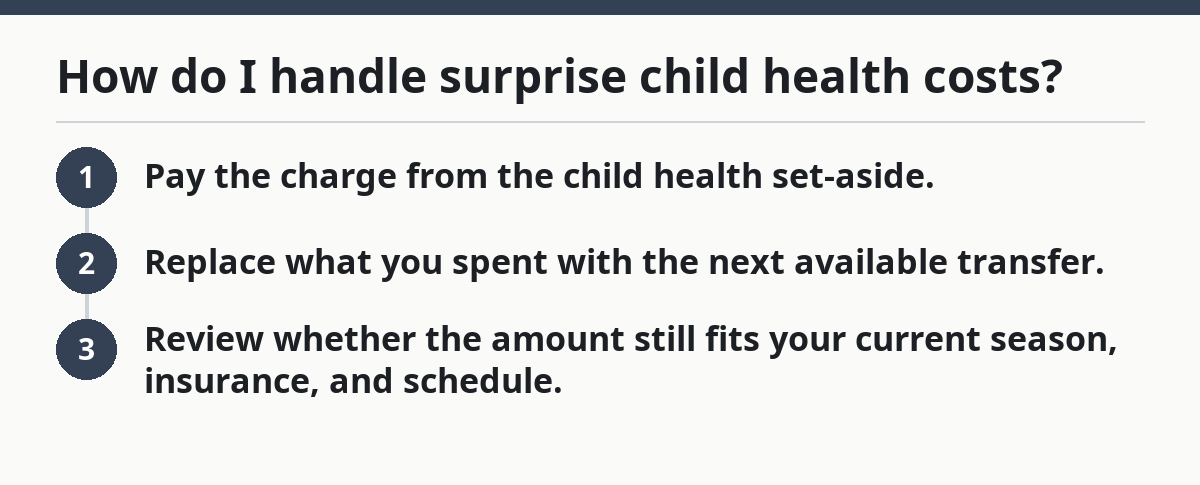
Use this three-part reset:
- Pay the charge from the child health set-aside.
- Replace what you spent with the next available transfer.
- Review whether the amount still fits your current season, insurance, and schedule.
If the cost was larger than expected, check whether the issue belongs in a different budget line.
A repeat pattern means the old number may no longer fit.
The best part is that you do not need a huge fund to start. You need a bucket that exists, a refill habit, and a clear rule for what belongs there.
What a good result looks like after 3 months
A good result is a budget that absorbs one minor visit without forcing you to skip another bill. It does not mean you never feel the charge; it means the charge has a place to land.
Picture this: three months in, you can point to the line item, see what went out, and refill it without guessing. That is a usable budget.
You should be able to answer three questions quickly:
- How much is in the child health set-aside now?
- What kinds of visits does it cover?
- How will you refill it after use?
If you cannot answer those in under a minute, the budget is too vague.
Tighten the labels.
This article sits under the broader health and family care budget guide for single parents, which can help you place this bucket inside the rest of your plan without turning it into a second full budget.
How do i budget for small medical emergencies for my child?
You budget by setting aside a separate amount for urgent care, copays, and simple supplies, then refilling it after each use. The budget works best when it has one purpose and a clear refill rule.
Keep the bucket small enough to fit your real cash flow. If the set-aside makes a bill short, lower the amount and build it more slowly.
What should i save for urgent care visits?
You should save for the visit charge, the copay if your plan has one, and the likely extras like wraps, bandages, or a follow-up call. The exact amount depends on your insurer, clinic, and country, so check your own terms before you set the target.
If you have a high-deductible plan, expect the first charge to feel different from a simple copay. That difference matters.
How do i handle surprise child health costs?
You handle them by paying from a dedicated child health line, then refilling that line as soon as you can. The key is to keep the money labeled, so the next bill does not steal from food, rent, or transport.
If the same kind of cost keeps happening, move it into a different budget category or ask the pediatrician whether the pattern needs follow-up.
Drafted with AI; not yet reviewed by a person.