Last updated: November 19, 2026
Key Takeaways
- Set a monthly pet cap first, then split costs into essentials, scheduled care, and irregular items.
- Break food, vet visits, grooming, and supplies into monthly dollar amounts from real prices.
- Plan for vet bills first, then urgent medication, then travel or after-hours care costs.
- Lower pet costs by changing price, timing, or service frequency without risking the pet’s health.
Quick Answer: A realistic monthly pet budget usually starts with one fixed cap and one separate reserve for surprise vet costs.
- Start with the pet care budget number you can actually live with
- How do I budget for pet food, vet visits, grooming, and supplies?
- What surprise pet costs should I plan for first?
- How to cut pet costs without cutting care
- The pet license, records, and renewals that trip up budgets
- Keep the budget working when life gets messy
A pet care budget for single parents works best when it treats pet food, veterinarian visits, flea treatment, grooming, license fees, and supplies as fixed parts of the month instead of afterthoughts. The goal is not perfection; it is knowing what the animal costs before the bill lands. For How to Budget for Pet Costs as a Single Parent, that means building one clear monthly number and one backup plan.
Start with the pet care budget number you can actually live with

A pet care budget starts with a monthly cap, not a wish list. That cap should fit the same household cash flow that has to cover rent, food, school costs, and the rest of single-parent life, so the pet budget has to be honest and narrow.
The most practical way to set it is to write down the pet costs that recur in a normal month and the ones that show up less often. Use one line for each of these:
- pet food
- flea treatment
- grooming
- license
- routine veterinary care
- litter, bags, or other supplies
Then give each line a monthly amount, even if some of them are paid every 3 months or once a year. A license that costs a set fee once a year still belongs in the monthly budget as one-twelfth of that fee. Same for grooming if the pet needs it every 6 to 8 weeks.
This budget is not for guessing. A bag of food, a quarterly flea product, and a rabies or license renewal can make a low-cost month look expensive if they are not spread out. The point is to avoid the panic of a “small” bill that arrives all at once.
A single parent also has to budget for timing. If your paycheck lands twice a month, it helps to set one pet money transfer on payday and one near the middle of the month. That keeps the pet fund from depending on what is left over.
This approach is not a fit for anyone who wants to treat pets as fully optional spending. If the budget cannot support basic care with room for surprise vet visits, the right answer is to reduce the pet’s cost level, not to hope the numbers improve.
How do I budget for pet food, vet visits, grooming, and supplies?
You budget for pet food, vet visits, grooming, and supplies by splitting them into monthly essentials, scheduled care, and irregular costs, then assigning each category a real dollar amount. That gives you a pet care budget you can check against your checking account instead of a vague “pet money” line.
Use this step-by-step process:
- List the pet’s regular items for 30 days: food, litter if needed, poop bags, and one flea treatment schedule. The result is a complete base list instead of a guess.
- Write the payment rhythm next to each item: weekly, monthly, every 3 months, or once a year. That tells you which costs need to be spread out.
- Convert every non-monthly cost into a monthly amount. For example, a 3-month flea treatment becomes one-third of the total cost per month, and an annual pet license becomes one-twelfth per month.
- Add a line for routine veterinary care, even if the pet only goes in once or twice a year. A normal visit, vaccines, or a wellness exam should not arrive as a surprise.
- Set a separate amount for grooming if the breed or coat needs it. A long-coated dog with 6- to 8-week grooming needs should not be paid for out of the food line.
- Compare the total to your real monthly cash flow. If the total is too high, lower the cost by changing the product tier, the grooming schedule, or the service frequency — not by deleting care entirely.
The result should be a monthly pet number that includes all the ordinary care a healthy pet needs. If the total is still fuzzy, your budget is not ready yet.
One common mistake is to budget only for pet food and call the plan finished. That can look manageable for 2 or 3 months, then collapse when the license, flea treatment, or grooming bill shows up. The fix is to divide annual and quarterly items into monthly pieces from the start.
For a source on preventive veterinary care and why routine visits matter, the American Veterinary Medical Association has useful guidance on wellness care. For pet food basics and label reading, the Association of American Feed Control Officials explains how pet food labels are structured. The U.S. Food and Drug Administration also provides pet food safety and labeling information.
What surprise pet costs should I plan for first?

You should plan first for vet bills, then for urgent medication, then for the travel or after-hours costs that come with getting care quickly. Surprise pet costs are the part of a pet care budget that breaks the month, so they need their own line and not just hope.
A basic emergency layer can include:
- an unexpected sick visit
- diagnostic tests, such as bloodwork or X-rays
- prescription medication
- transportation to an emergency clinic
- a backup supply of food if the pet has a special diet
The mistake most people make is waiting until a crisis to decide what “emergency” means. A same-day clinic visit at 6 p.m. is not the same as a routine appointment on Tuesday morning, and the price and stress are usually different too. Even when the bill is not huge, the timing can wreck the rest of the month if nothing is set aside.
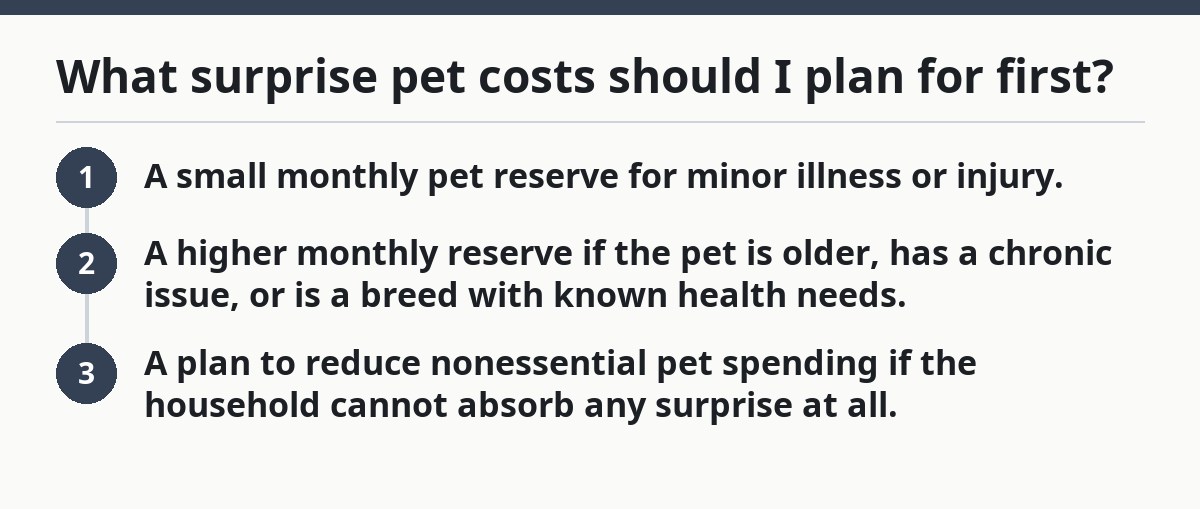
For a single parent, the practical question is not “Can I cover every possible emergency?” It is “What is the most likely shock I can handle without skipping rent, utilities, or groceries?” That means choosing one of three budget positions:
- A small monthly pet reserve for minor illness or injury.
- A higher monthly reserve if the pet is older, has a chronic issue, or is a breed with known health needs.
- A plan to reduce nonessential pet spending if the household cannot absorb any surprise at all.
This is the part of the budget where honesty matters most. If a $300 vet bill would create a chain reaction, the budget is not broken; it is telling the truth. From there, the answer may be smaller commitments, not guilt.
The article on the expense planning and category management for single parents hub can help with the broader household system around this budget, but the pet line still needs its own rules.
How to cut pet costs without cutting care
You cut pet costs by changing the price of the item, the timing of the purchase, or the frequency of the service, while protecting the pet’s health and safety. The cheapest option is not always the right one, but a few decisions can lower the monthly total without harming care.
Start with food. Buy the size that gets used before it goes stale, and choose a formula that the pet tolerates well, because cheap food that causes stomach trouble costs more later. If the pet is on a prescription diet, do not switch without veterinary guidance.
Then look at grooming. Some pets need professional grooming every 6 to 8 weeks; others do fine with brushing at home, nail trims, and occasional baths. If the coat can be maintained safely at home, grooming money can drop fast. The trade-off is time, and single parents often pay that cost in the evening after the child is in bed.
Flea treatment is another place to trim carefully. Use the product and schedule recommended for the pet’s size and species. Skipping treatment can create a larger bill later if fleas spread through the home or trigger skin problems.
For supplies, avoid duplicates. One leash, one collar or harness, one travel crate if needed, and a few backup bags or litter items are enough for many households. The budget gets inflated when the cabinet fills with spare accessories that do not change daily care.
This section is not for anyone who is already using the lowest safe level of care and still cannot make the numbers work. If the budget only works by delaying veterinary visits, skipping flea control, or buying food that does not meet the pet’s needs, the problem is not efficiency. It is affordability.
The pet license, records, and renewals that trip up budgets
A pet license budget works best when the renewal date, rabies proof, and paperwork are tracked together, because the cost is usually small but easy to forget. That forgetfulness is expensive in a different way: late fees, rushed appointments, and one-off trips to prove the pet is current.
Keep one simple system:
- store the license renewal month in your phone calendar
- keep the vaccine record in the same place every year
- mark the pet’s tag or microchip number in the household file
- set aside the renewal amount monthly, even if the bill arrives only once a year
The same system should track flea treatment refills if they are scheduled every 1 to 3 months, plus grooming appointments if you use a standing 6-week cadence. These are not huge line items individually, but they are exactly the kind of costs that cause stress when they pile up in the same week.
A common mistake is paying for the license out of the grocery or school budget because “it is only once a year.” That creates a hidden dip in the household budget and makes the pet seem cheaper than it is. Put the fee in the pet category, spread over 12 months, and the annual cost stops ambushing the rest of the month.
This is also where a pet care budget becomes a household management tool, not just a pet tool. Once the renewal dates are in one place, the budget shows you which months carry more pressure and which ones can quietly absorb it. That is useful for any parent, but especially for a single parent who cannot afford surprise errands during a workday.
For factual guidance on licensing and local pet requirements, the best source is usually the city, county, or state animal control office that handles the license.
Keep the budget working when life gets messy
A pet care budget keeps working when it is reviewed every month for 10 minutes and adjusted after any big change in food, veterinary care, or grooming. That is the real maintenance task, because the budget that was right in January may be wrong by spring.
Use a short monthly check:
- compare planned pet spending to actual spending
- note any bill that hit more than 10% above plan
- move money from a lower-priority pet line if one category runs hot
- update the next month’s amount if a price changed or a service schedule shifted
This review matters because pet costs are not static. A puppy, a senior cat, a dog with skin issues, or a pet that needs prescription food can change the budget shape fast. A budget that ignores that shift will look neat and fail in real life.
One honest trade-off: tighter pet budgets usually demand more admin. You may spend 15 minutes each month checking receipts, calendar dates, and refill timing. That is a real cost, but it is still cheaper than treating every surprise as a crisis.
The budget is not finished when the numbers balance once. It works when it can survive a missed work shift, a larger-than-expected vet visit, or a grooming bill that lands in the same week as the pet license renewal. If it cannot survive one of those, it needs a smaller scope, not a more optimistic spreadsheet.
What pet costs should be in a budget?
A pet budget should include food, routine vet care, flea treatment, grooming if needed, the pet license, and basic supplies. It should also include a separate line for surprise vet bills, because those costs are part of real pet ownership, not rare extras.
How do I save for vet bills?
Set aside a fixed amount every payday and keep it in the pet care budget, not in general savings. Even a modest monthly transfer can build a cushion for routine visits, tests, or medication, and it is easier to keep up when the money moves automatically on the same 2-paycheck rhythm each month.
Drafted with AI; not yet reviewed by a person.