Last updated: November 19, 2026
Key Takeaways
- Split school lunch costs into cafeteria deposits and packed-lunch spending.
- Set the school lunch account to cover expected buy-lunch days without a midmonth scramble.
- Budget lunch money with weekly caps for cafeteria and packed lunches, then compare them with grocery and cash flow.
- Packing lunches can cost more than groceries alone because of containers, replacements, and lunch-box-friendly food.
School lunch costs are easiest to manage when I split them into two buckets: cafeteria deposits and lunch-packing costs. That gives me a real monthly number instead of a vague feeling that school meals are “somehow expensive.” This article covers How to Budget for School Lunch Money and Lunch Packing Costs as a Single Parent, using a simple split that makes the numbers easier to track.
Start with the two lunch budgets that matter

The cleanest budget separates school lunch costs into the cafeteria account and the packed-lunch line item. The cafeteria account covers money sent to the school lunch account for buy-a-lunch days, while the second bucket covers groceries, lunch containers, and the small extras that turn into real spending fast.
That split matters because the costs behave differently. Cafeteria deposits are usually a set amount I can plan ahead for, while packed lunches can swing based on groceries already in the house, what my child will actually eat, and how often I have to replace containers. If I lump both together, I lose track of where the money is going.
A practical starting point is one week of lunch planning. I look at the school calendar and decide which days are packed and which are cafeteria days. A 5-day school week is the normal baseline, but field trips, half days, and early dismissals can change it. Then I assign a dollar amount to each day before I buy anything.
This page is about lunch money only, not back-to-school supplies or activities. For the broader category setup, the hub on expense planning and category management for single parents is the right next stop.
If school sends home a cafeteria price sheet, use it. If it does not, I would treat the lunch account as a fixed weekly transfer and adjust after the first two weeks, ideally with the school’s own payment guidance or a financial professional if the setup is unclear. The goal is not perfection; it is a budget that survives real school mornings. See the USDA school meals information and the CFPB budgeting guidance for general planning help.
How much goes into a school lunch account?
The right school lunch account deposit is the amount that covers the cafeteria lunches I expect to buy without forcing a midmonth scramble. That number should be based on a week, not a guess, because a weekly pattern is easier to maintain than a vague monthly promise.
I start by listing the lunch days in a normal week:
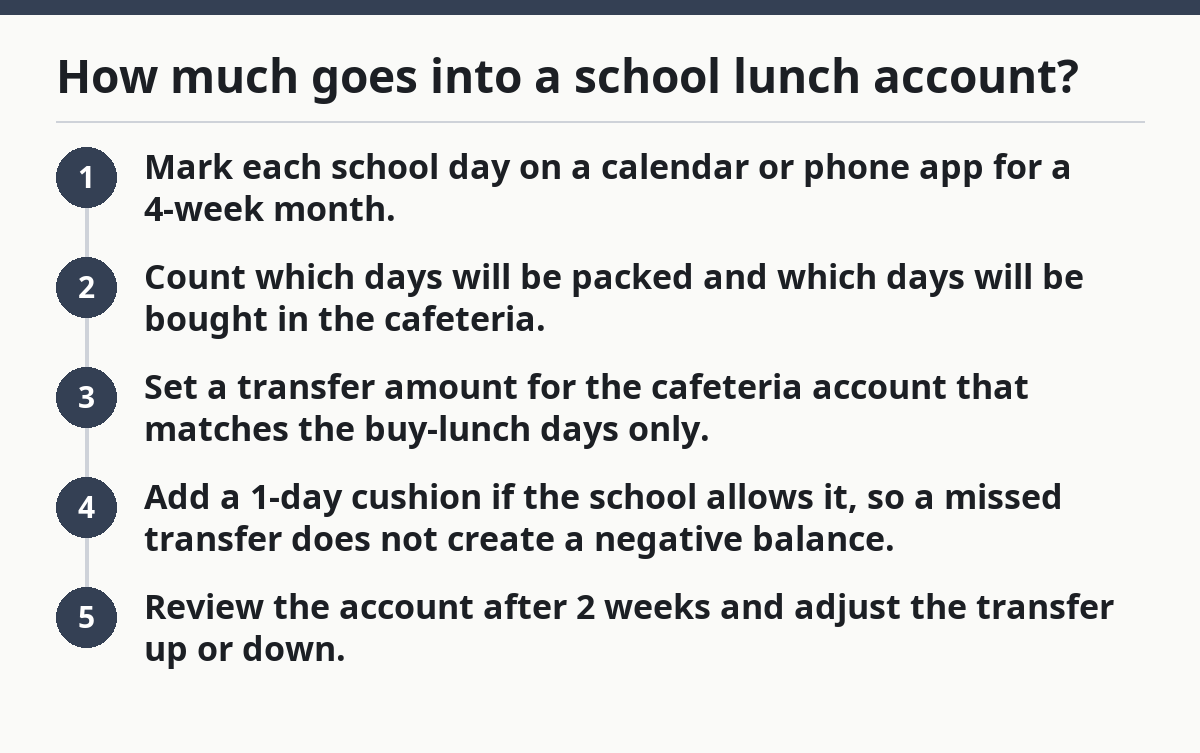
- Mark each school day on a calendar or phone app for a 4-week month.
- Count which days will be packed and which days will be bought in the cafeteria.
- Set a transfer amount for the cafeteria account that matches the buy-lunch days only.
- Add a 1-day cushion if the school allows it, so a missed transfer does not create a negative balance.
- Review the account after 2 weeks and adjust the transfer up or down.
That process works because it turns lunch money into a routine transfer, not an emergency refill. If the school uses an online payment system, I would rather schedule one recurring deposit than make random manual payments every time the balance looks low. The benefit is fewer surprises; the trade-off is that I have to watch for school fees or payment processing quirks, which can change how often the balance updates.
One honest limitation: this method depends on knowing the school’s lunch schedule and account rules. Some schools only allow certain deposit amounts or charge separate service fees through their payment platform. I do not assume the cafeteria account is free just because the lunch itself is standard.
A sensible rule is to keep the account balance high enough that a child can buy lunch for several days, but not so high that I stop checking it. A once-a-week review on the same day, such as Sunday evening, is enough for most families.
How do I budget for lunch money?
I budget lunch money by assigning a weekly cap to cafeteria spending and a second weekly cap to packed lunches, then checking both against my grocery and cash-flow calendar. That is the simplest way to keep school lunches from turning into a hidden category that eats the rest of the month.
Here is the core procedure I use:
- Pick one school week and write down every lunch day, including any half-day where lunch may still be needed.
- Decide which days are cafeteria days and which are packed-lunch days.
- Set a weekly cafeteria deposit that matches the number of buy-lunch days.
- Estimate packed-lunch grocery spending for 5 lunches, then divide that into a weekly amount.
- Add a separate line for lunch containers, ice packs, and replacement items spread over a month.
- Put all three amounts into the same budget page so I can see the full lunch cost in one place.
The reason for the separate lines is that packed lunches do not just cost food. Bread, fruit, yogurt, cheese, crackers, reusable bags, and containers all show up in the total. A child-friendly lunch box system can also need an insulated bag or an ice pack, especially if the lunch sits for 4 to 6 hours before eating.
A packed lunch budget works best when I plan from ingredients, not from vague “lunch stuff.” One loaf of bread can serve multiple lunches, but individually packaged snacks can push the cost up quickly. The budget should reflect the actual lunch pattern: sandwiches 3 days a week, leftovers 1 day, cafeteria 1 day, for example.
The biggest mistake here is using one average number for every child or every month. If one child brings leftovers and another wants sandwich ingredients plus snack packs, their lunch costs will never match. The fix is to budget per child or per lunch pattern, even if the grocery shopping happens in one trip.
The real cost of packing lunch
Packing lunch costs more than groceries alone, and the extra cost comes from containers, replacement parts, and the food choices that survive a lunch box. That is the part generic advice often skips.
A packed lunch budget usually includes three layers:
- Food groceries: bread, wraps, fruit, vegetables, cheese, yogurt, crackers, pasta, leftovers, and drinks.
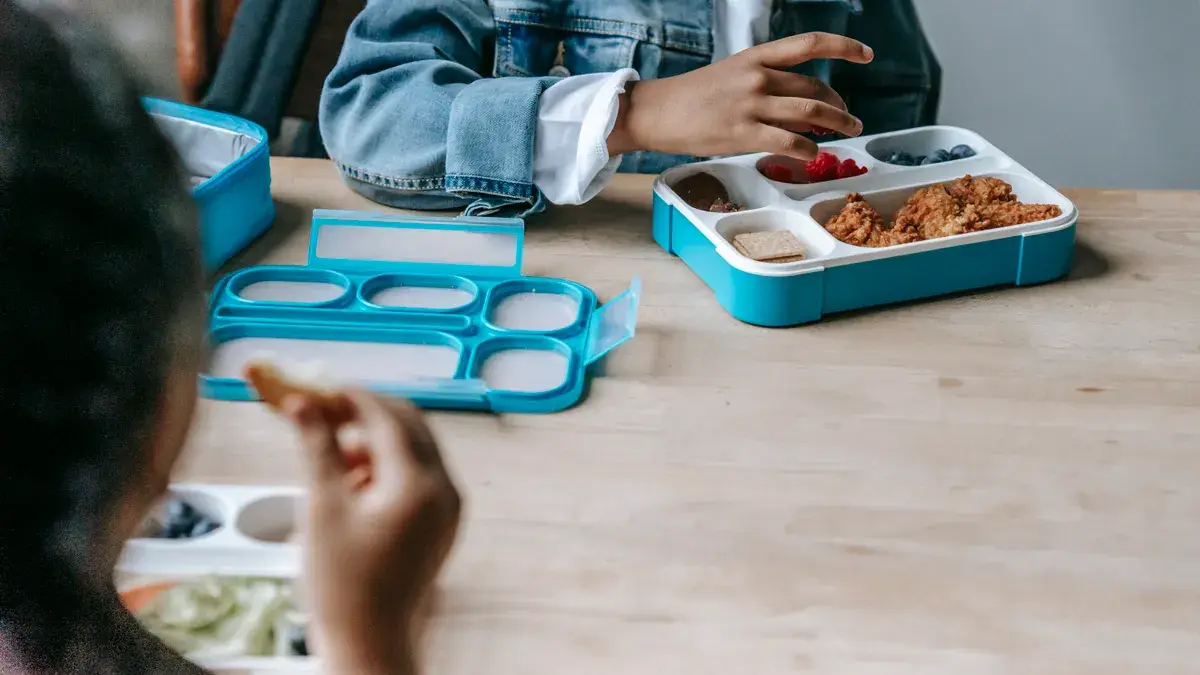
- Packing supplies: lunch containers, reusable silicone cups, bento boxes, insulated bags, napkins, utensils, and ice packs.
- Replacement and waste: lids that crack, containers that disappear, and snack items that get sent back uneaten.
The supplies line can be small in one month and larger in another. A good lunch container set can last a long time, but lids, seals, and ice packs wear out. A single cracked lid may not seem like much, yet repeated replacements can slowly raise the true cost of packing lunch.
This is where many budgets break: they count the food, but not the packaging. If I buy a new lunch box every school year or replace a broken water bottle, that belongs in the lunch budget, not in some unnamed “miscellaneous” folder. A 12-month view makes this easier. Even a modest replacement every few months changes the average.
I also watch snack costs closely. Prepackaged snack bars, chips, fruit cups, and juice boxes are convenient, but they can cost more over time than whole fruit or bulk snacks portioned at home. That does not mean never buy them. It means put them in the budget on purpose instead of treating them like free add-ons; if the budget is still unclear, a school nutrition professional or registered dietitian can help refine it.
A practical limit helps here: if the packed-lunch grocery bill keeps drifting because of snack items, I tighten the snack rule before I cut the main lunch. The lunch still needs protein, fruit or vegetables, and something filling enough to keep a child satisfied through the school day.
A lunch budget that works on a single parent schedule
A lunch budget works for a single parent only if it survives tired evenings, payday timing, and a child who changes preferences every 2 weeks. That means the budget has to be simple enough to run during a busy week, not just neat on paper.
I keep the system narrow:
- One weekly lunch plan
- One cafeteria account check
- One grocery trip or pickup order
- One container inventory check
That keeps the process from becoming a daily decision problem. A 15-minute planning block on the same night each week is usually enough to decide lunch patterns, update the grocery list, and catch missing items before Monday. If I shop online, I build the lunch list into the same order so I am not making separate trips for one forgotten yogurt box.
The schedule matters because single-parent budgets are often cash-flow budgets, not just category budgets. A plan that assumes money is always available on the 1st of the month can fail by the 18th. Weekly lunch planning smooths that out. I can transfer a smaller cafeteria amount each week and buy groceries when the rest of the household shopping happens.
This approach is not ideal for every family. If a child eats school lunch every day and the school cafeteria is the only realistic option for most weekdays, a packed-lunch plan may not save time or money. In that case, the better move is to make the school lunch account the main budget line and keep the packed-lunch section only for backup days. The opposite is true for families that already cook at home and can pack leftovers cheaply.
The budget works when it matches the real routine. It fails when it is built for a fantasy week with extra time, perfect leftovers, and no missed lunch boxes.
Common mistakes that make lunch money disappear
The most expensive mistake is undercounting the small stuff, because lunch costs leak through snacks, replacements, and convenience purchases. A budget can look fine and still fail if it ignores those items.
Here are the mistakes I would watch for:
- Using only cafeteria deposits and ignoring packed lunches. That leaves grocery spending untracked and makes the lunch category look smaller than it is.
- Buying lunch containers without a replacement plan. A one-time $20 container set may be fine, but broken lids and missing pieces will show up later.
- Packing lunches without a weekly grocery plan. That usually leads to one-off store runs, which cost more and waste time.
- Overbuying snacks to avoid complaints. The budget gets eaten by convenience foods that disappear fast and do not fill the child up for long.
- Putting lunch money in the general grocery pile. That makes it impossible to tell whether the school lunch plan is actually affordable.
The fix is not strictness for its own sake. The fix is visibility. I want a separate lunch line in the budget, even if the money still comes from the same bank account. If I can see the monthly school lunch total, I can change the plan before the category spills into other essentials.
A useful standard is to review lunch spending every 4 weeks. That is often enough time to spot patterns without obsessing over every carton of yogurt. If the total is higher than expected, I look first at snacks and replacement items before changing the main lunch pattern.
What to do when the budget still feels too tight
When the lunch budget still feels too tight, I cut complexity before I cut nutrition. That usually means fewer lunch days from the cafeteria, simpler packed lunches, and fewer specialty snacks.
The easiest changes are mechanical:
- Pack leftovers 1 or 2 days a week instead of buying all 5 lunches.
- Rotate 3 lunch templates instead of making a new meal every day.
- Buy reusable containers that fit the food I already send, rather than specialty boxes for every item.
- Limit premium snacks to 1 or 2 days a week.
- Use the school lunch account only on the days that matter most, such as days with after-school activities.
There is a trade-off here. Simpler lunches are cheaper, but they can feel repetitive. That is the price of staying within budget. If a child consistently refuses the packed lunch, the cheapest plan on paper may become wasteful in practice, so I would usually reassess the menu before assuming the budget itself is wrong.
If the budget still does not work after a month of tracking, the problem is usually not the lunch itself. It is the combination of grocery habits, school calendar surprises, and snack spending. I would review the whole lunch pattern before assuming the family needs a bigger overall food budget.
FAQs
Is it cheaper to pack lunch or buy school lunch?
Packing lunch is often cheaper, but the real comparison includes groceries, lunch containers, and snack items, not just the price of the cafeteria meal. If a packed lunch uses leftovers and simple ingredients, it usually wins on cost; if it relies on packaged snacks and one-off purchases, the savings shrink fast.
How do I budget for lunch money?
I budget lunch money by splitting it into two lines: cafeteria deposits and packed-lunch costs. Then I assign a weekly amount to each line, review the school calendar, and adjust after 2 weeks if the balance is off. That gives me a clear number to fund every week without waiting for a surprise notice from the school lunch account.
Related resources
For budgeting support, see the CFPB budgeting tools and the USDA school meals program information. For broader financial planning, the hub on expense planning and category management for single parents can help connect lunch costs to the rest of the household budget.
See also: USDA School Meals and CFPB budgeting resources
Drafted with AI; not yet reviewed by a person.