Last updated: November 19, 2026
Quick Answer: Set aside a specific monthly amount for How to Budget for Medical Copays and Prescriptions as a Single Parent by using your last 6 to 12 months of copays and refill costs, then add a buffer for one extra visit and one refill cycle. Medical copays and prescriptions can wreck a tight month fast, especially when you’re covering out-of-pocket healthcare costs for one child and yourself. Budget for them as a separate, named category so doctor visit copays, urgent care costs, and prescription medication don’t quietly eat rent money. The steps below show how to set that amount, track refills, and use HSA or FSA funds without guessing.
What counts as out-of-pocket healthcare costs?
Out-of-pocket healthcare costs are the bills you pay yourself after insurance does its part, and that includes the kind of spending in How to Budget for Medical Copays and Prescriptions as a Single Parent. That usually means a copay, a deductible charge, coinsurance, prescription medication, and anything the pharmacy bills you directly at pickup.
Picture this: you’ve already paid the premium, but a child’s fever turns into a same-day doctor visit, a strep test, and a pharmacy stop before dinner. The bill doesn’t arrive as one neat number; it shows up in pieces.
For a bigger money map, this page sits inside the hub on expense planning and category management for single parents.
Here’s the catch:
- A doctor visit copay is usually flat and predictable.
- A pharmacy charge can change if the drug is brand-name, out of stock, or fills only part of the prescription.
- Urgent care often costs more than a primary care visit, even with insurance.
- A refill can be early, late, or denied until a prior authorization clears.
If you want a plain definition of the term, a simple way to think about it is the money that leaves your bank account after coverage but before anything is fully “free.” The details matter because a $20 copay and a $60 prescription refill are not the same kind of surprise.
Key Takeaways
- Budgeting here means tracking the bills insurance doesn’t erase.
- Copays are predictable; prescriptions often aren’t.
- A separate category keeps medical costs from stealing grocery money.
- Urgent care and refills need their own line, not a vague “health” bucket.
How do I figure out a realistic monthly amount?
You figure out a realistic monthly amount by using last year’s bills, then adding a buffer for one extra doctor visit and one refill cycle. That gives you a number based on your real life, not a wish.
Picture this: you’re staring at your bank app on a Sunday night, trying to guess what the next 30 days will cost. Guessing is the mistake. A short, honest review of the last 12 months gets you much closer.
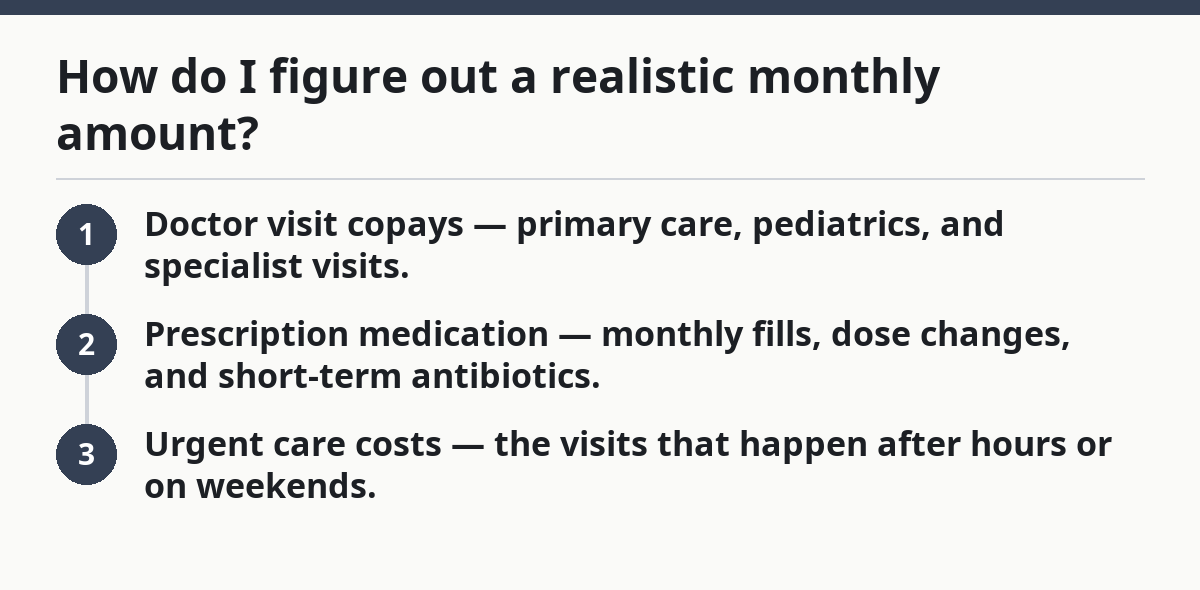
Start with three buckets:
- Doctor visit copays — primary care, pediatrics, and specialist visits.
- Prescription medication — monthly fills, dose changes, and short-term antibiotics.
- Urgent care costs — the visits that happen after hours or on weekends.
Then look back at the last 6 to 12 months of receipts, insurer claims, and pharmacy texts. If you use the same medicine every month, average the refill cost over that time. If the price jumps, use the higher number, not the lowest one you saw once.
A simple method:
- Add up every copay and prescription bill from the last 3 months.
- Divide by 3.
- Add one extra visit amount if your child is in school, sports, or daycare.
- Round up to the next clean number so the budget has breathing room.
On the flip side, don’t use only last month’s total if it was unusually quiet. A month with no sick visits tells you almost nothing about cold season.
If the cost swings a lot, use a range instead of a single number. For example, keep your budget line high enough to cover a typical doctor visit copay plus one pharmacy pickup, then move the leftover into the next month.
A simple step-by-step budget for copays and prescriptions
You build the budget by naming the category, setting the monthly amount, and deciding where the money sits before you need it. That keeps a pharmacy counter visit from turning into a balance panic.
Picture this: your child needs a refill on a Friday afternoon, and you’re trying to decide whether to swipe a card or wait. A plan beats a last-minute choice every time.
- List the 3 healthcare costs you actually see. Write down doctor visit copays, prescription medication, and urgent care costs. If you have a child with a recurring medicine, include the refill cost for each month, not just the first fill.
- Pull one full month of evidence. Use insurance claims, pharmacy receipts, and bank transactions from the last 30 days. If the month was unusual, use a second month too so one sick week doesn’t skew the number.
- Set a target amount for each line. Give copays a monthly dollar amount, give prescriptions their own line, and leave a small cushion for a surprise same-day visit. The result should be a number you can actually fund, not a guess that looks tidy on paper.
- Choose the holding place. Put the money in checking if you need instant access, or in an HSA or FSA if the plan allows and the card works at the pharmacy. The goal is quick access at the point of sale.
- Fund it on payday. Move money into the category right after income lands, even if the first transfer is small. A $25 move is better than waiting for the “right” week.
- Track the refill cycle. Mark the next fill date when you pick up the medicine. If the pharmacy allows a 90-day supply, note that too, because the spending pattern changes right away.
A good budget is not perfect; it is repeatable. If the category keeps running short, raise it by the amount of one copay or one typical refill, not by a vague “some more.”
What if prescriptions cost different amounts every month?
You handle variable prescription costs by budgeting for the highest normal refill, then using the lower-cost months to refill the category. That keeps the pharmacy from becoming a surprise bill collector.
Picture this: one medicine is cheap at the generic counter, while another needs prior authorization, a brand-name fill, or a temporary partial refill. That swing can throw off a monthly plan, so consult your pharmacist or insurer before assuming every prescription will cost the same.
The smartest approach is to sort medicines into three groups:
- Monthly maintenance meds that refill every 30 days.
- Short-term meds like antibiotics or steroids.
- Unpredictable meds that change with dose, supply, or insurance rules.
For the first group, budget the average refill plus a margin. For the second, set aside a small amount each month if you know your household gets seasonal illness. For the third, use the highest price you’ve paid in the last year, because that is the number most likely to hurt.
The truth is, the pharmacy line item can change for reasons that have nothing to do with your kid’s health:
- The pharmacy may be out of stock and fill a partial amount.
- The insurer may apply a different formulary tier.
- The doctor may change the dose.
- The same medicine can cost differently at a different pharmacy.
If you use a mail-order pharmacy, ask whether the cost changes for a 90-day supply. That can spread spending out better for maintenance meds, but it also means a bigger payment on one day. Not every budget can absorb that all at once, especially if cash flow is tight.
Two helpful places to check are your insurer’s member site and the FDA’s guidance on generic drugs, which can help explain why two versions of the same medicine don’t always price the same. The FDA page on generic drug facts is a useful reference.
How do I handle doctor visit copays and urgent care costs?
You handle doctor visit copays and urgent care costs by treating them as separate expenses with different triggers and different price pressure, and it helps to check your plan details if you are unsure. A routine pediatric appointment is not the same thing as a Saturday urgent care visit.
Picture this: one child needs a school form signed, and another wakes up with a fever at 8 p.m. Those are both healthcare costs, but they do not belong in the same mental bucket.
Use a simple rule:
- Put routine doctor visit copays in the main medical category.
- Put urgent care in a side bucket inside the same category.
- Keep specialist visits separate if they happen often enough to change the budget.
Why separate them? Because urgent care is usually the cost that blows up a month. It is the “we had no choice” bill, so it deserves its own reserve even if the reserve is small.
A practical setup:
- If you know the copay amount, fund that amount every month.
- If urgent care is rare, save the cost of one visit over time.
- If you use urgent care often, raise the line so it reflects the pattern you already live with.
A mistake here is assuming every medical visit is “about the same.” It isn’t. A primary care checkup, a pediatric specialist appointment, and urgent care can hit your card very differently depending on the plan. Check your explanation of benefits or insurer portal, not memory.
Once you separate these costs, you can see whether you need better timing, a different pharmacy, or a bigger monthly set-aside. That turns a vague money headache into a clear category problem.
HSA or FSA: when they help and when they don’t
HSA or FSA funds help when you use them for eligible copays and prescriptions before the money sits in your checking account and disappears. They do not fix a budget if the account is empty or the card can’t cover the full charge.
Picture this: you’re at the pharmacy counter with a child’s prescription in hand, and the total is due now. If your HSA card works, that money can pay the bill directly. If not, you may need to pay out of pocket and submit for reimbursement later.
Here’s how the two accounts affect your budget:
- HSA money can stay available year to year if the account is eligible for that treatment.
- FSA money is often more time-limited, so the timing of your spending matters more.
- Both can reduce the strain on checking if you plan to use them for copays and prescription medication.
A clean workflow:
- Check whether your plan allows pharmacy and doctor visit use.
- Keep receipts for every eligible copay and refill.
- Use the card at the point of sale when possible.
- Reimburse yourself only when the rules allow it.
The catch is cash flow. If you put too much faith in the HSA or FSA and forget the rest of the month’s bills, you can still come up short on rent or groceries. These accounts are payment tools, not a full budget.
If the plan details are fuzzy, use the insurer’s benefit summary and your account administrator’s eligible-expense list. That is safer than guessing and getting stuck with a denied claim.
Mistakes that make single-parent medical budgets break
The biggest mistakes are underfunding the category, mixing it with groceries, and ignoring refill timing. Each one costs money fast, and none of them needs to happen.
Picture this: the month starts clean, then a child needs a sick visit, a refill, and a follow-up before payday. If the medical money lives in the same pile as food and gas, it disappears without a trace.
Common errors and what they cost:
- Using one vague “health” bucket: you can’t tell whether prescriptions or visits are draining the account.
- Budgeting only for premiums: you think healthcare is covered until the pharmacy says otherwise.
- Waiting until the refill is due: rush timing can force you to pay whatever the counter shows.
- Ignoring school-year spikes: fall colds and sports injuries hit different than summer.
Do this instead:
- Keep a separate line for copays.
- Keep a separate line for prescriptions.
- Note refill dates the day you pick up the medicine.
- Add one small cushion for urgent care.
A better budget is not one that never changes. It is one that changes on purpose. If your plan keeps getting blown up by the same medicine every month, the fix is not more willpower. It’s a higher category amount.
Two sources that can help you cross-check details are your insurer’s formulary and the FDA’s generic-drug information. Those pages won’t build the budget for you, but they explain why the same prescription can cost different amounts at different pharmacies.
How to keep the budget working month after month
You keep the budget working by reviewing it every 30 days and adjusting for the next refill, the next visit, and any price change. Small, regular fixes beat a big annual cleanup.
Picture this: the first plan worked in January, then March brought a new antibiotic, a school nurse call, and a pharmacy change. That does not mean the budget failed. It means the category needs a tune-up.
Use this monthly check:
- Compare planned copays against actual copays.
- Compare prescription budget against refill totals.
- Note any urgent care visit.
- Update the next month’s number if one medicine changed dose or price.
A good question to ask yourself is simple: did I miss because I guessed low, or because the medical need changed? Those are different problems. If the medicine changed, the fix may be a new budget line. If the spending stayed the same but you didn’t save enough, the fix is a bigger monthly transfer.
You can also make the budget easier to live with:
- Keep the pharmacy’s refill text alerts on.
- Track the next doctor visit on a calendar you already use.
- Hold the medical category in a place you can reach at the counter.
That’s the real goal here. Not perfection. Predictability.
Should I budget for medical copays separately?
Yes, you should budget for medical copays separately because they are recurring but uneven costs. A doctor visit copay can show up on the same week as a prescription refill, and mixing them into one general “health” line makes it harder to see what’s driving the bill.
Keep a separate medical category if you want a clearer monthly target. Then split that category into copays, prescriptions, and urgent care if your spending is unpredictable.
How do I plan for prescription costs?
You plan for prescription costs by using the refill price you actually pay and by keeping it in the same medical category as your copays. That way, you can adjust when the pharmacy changes the amount instead of treating every month like a surprise.
Drafted with AI; not yet reviewed by a person.