
Last updated: November 19, 2026
Key Takeaways
- Split glasses costs into exam, lenses, frames, and replacements, then save for each on its own schedule.
- Price the eye exam first, since it sets the rest of the vision budget.
- Save for the exam cost plus any gap after insurance help.
- Vision insurance can reduce costs, but it often leaves some out-of-pocket expenses.
A single parent who budgets for vision care usually starts with one number: a separate fund. First comes the exam, then glasses or contacts, depending on what the household actually needs. The smartest move is to build a dedicated care fund, price the exam and replacement cycle, and check what vision insurance actually covers. This guide covers how to budget for vision care as a single parent, where the numbers usually land, and how to keep the plan realistic.
Our Top 3 Picks at a Glance

- #1 Best Overall: A separate vision care fund with a small monthly transfer and a yearly checkup plan.
- #2 Best Budget Pick: An exam-only budget first, then a glasses line item when frames or lenses are due.
- #3 Best Heavy-Duty / Upgrade Pick: A broader family health-and-vision budget that treats contacts, backups, and replacements as planned costs; if your situation is complex, consult an optometrist or billing specialist and check your plan details.
How do I budget for glasses?
Split the cost into exam, lenses, frames, and replacements, then save for each part on its own schedule. Do not treat glasses like one random emergency bill; the exam and the replacement cycle hit at different times, and that difference matters. If your coverage is unclear, consult the insurer or eye-care office and verify the policy details.
Picture a child’s bent frame, an adult prescription that has shifted, and a calendar that is already packed. You need a number you can actually fund. Not a guess that folds on contact.
Start with the care you know is coming, then build from there.
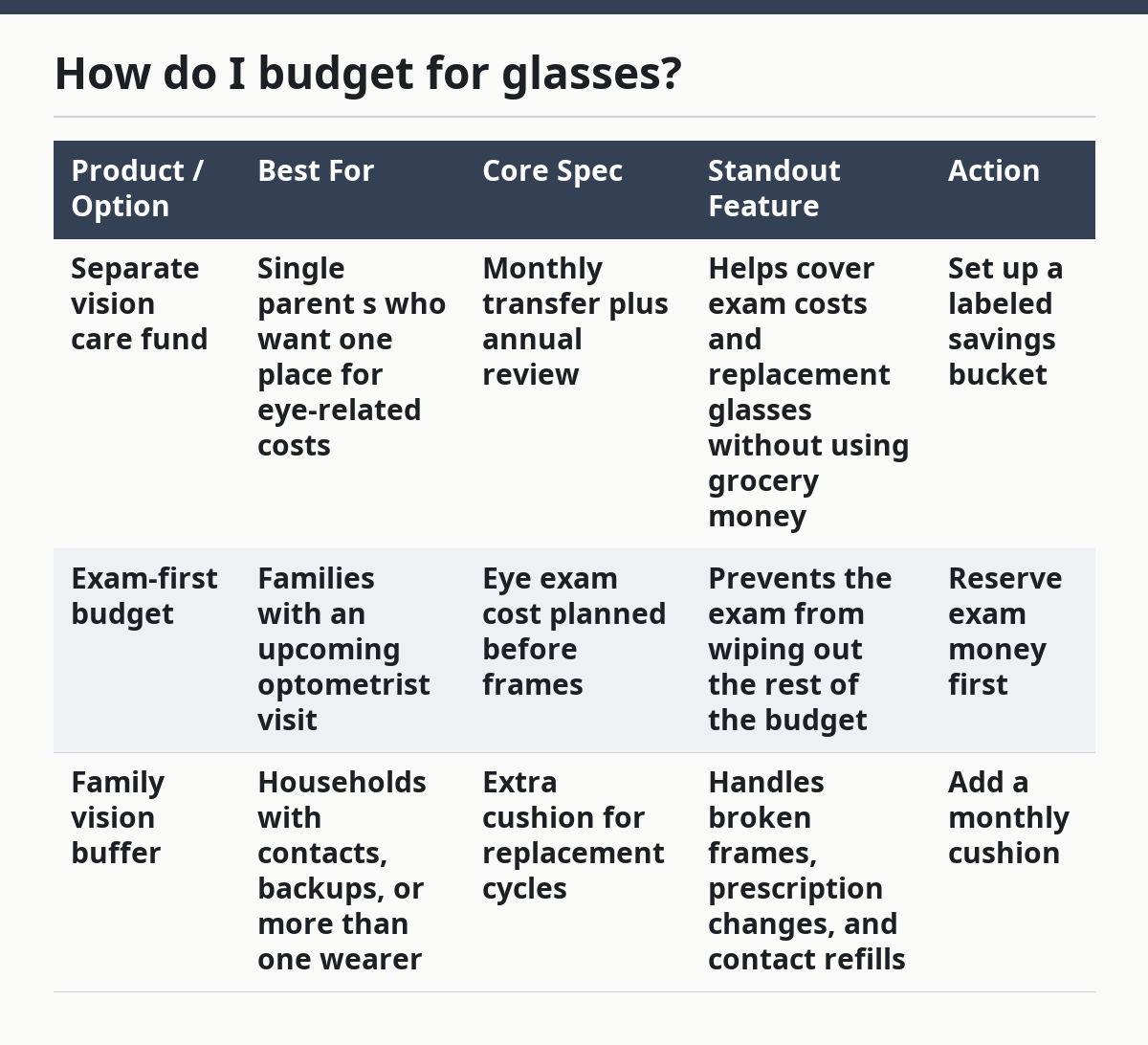
| Product / Option | Best For | Core Spec | Standout Feature | Action |
|---|---|---|---|---|
| Separate vision care fund | Single parents who want one place for eye-related costs | Monthly transfer plus annual review | Helps cover exam costs and replacement glasses without using grocery money | Set up a labeled savings bucket |
| Exam-first budget | Families with an upcoming optometrist visit | Eye exam cost planned before frames | Prevents the exam from wiping out the rest of the budget | Reserve exam money first |
| Family vision buffer | Households with contacts, backups, or more than one wearer | Extra cushion for replacement cycles | Handles broken frames, prescription changes, and contact refills | Add a monthly cushion |
Start with the eye exam, not the frames.
Price the exam first because it tells you whether glasses or contacts need to change. If you budget for frames before that appointment, you can end up short when the optometrist visit finally lands.
Picture this: the prescription is already old, but the visit still has no price attached. That is where budgets crack. An eye exam is the gatekeeper cost; the frame money belongs behind it, not ahead of it.
- List every wearer in the house and note who needs an exam in the next 12 months. Verify whether each person wears glasses, contacts, or both; if you miss a wearer, the budget will be short.
- Price the exam through your optometrist and your vision insurance plan if you have one. Verify the copay, discount, or allowance before the appointment; if the amount is unclear, your budget guess is too soft.
- Separate the exam line from the glasses line in your budget. Verify that the exam money can cover the visit even if you decide not to buy frames that same day; if it cannot, the plan is too tight.
- Add the frame allowance only after the exam is covered. Verify that the frame number leaves room for lenses, because lenses often cost more than the frame itself.
- Set a replacement cycle for glasses, such as checking the pair every 6 to 12 months for wear, prescription changes, or outgrown fit. Verify the cycle matches how fast your household actually breaks or outgrows frames; if it’s unrealistic, the savings plan will fail.
- Create a small repair buffer for screws, nose pads, and minor fixes. Verify that this buffer exists before something bends or snaps; if you wait until after the break, the money has to come from somewhere else.
- Review the total every time someone gets a new prescription or starts contacts. Verify that the monthly savings still matches the year’s actual needs; if the total jumps, adjust before the next refill or exam.
The best part? You do not need a perfect forecast. You need a plan that survives a real school year. Small monthly savings beat one large, stressful bill.
What should I save for an eye exam?

Save enough to cover the exam itself, plus the cost gap after any insurance help. The exact amount depends on where you live, the provider, and the plan, so the safe move is to ask for the price before you book.
Picture this: the appointment is already on the calendar, but the bill is still a mystery. That is a rough place to budget from. The exam cost is not just a number — it anchors the rest of the vision care plan.
- Ask the optometrist for the self-pay exam price and the insured price, if you have vision insurance.
- Check the plan terms for copays, allowances, and whether the exam and glasses are billed separately; if the wording is confusing, consult the insurer or office staff before you book.
- Save a cushion for extra testing if the office recommends it, since some visits go beyond a basic refraction.
- Confirm timing for the appointment and payment so the bill does not land in the same week as rent or daycare.
How vision insurance changes the budget.
Vision insurance can lower some costs, but it often does not erase them. The plan may help with the exam, then use a separate allowance or discount for frames or lenses, which means you still need cash set aside.
Many families assume insurance means “covered.” Usually, it means “partly covered.” On a budget sheet, that difference matters more than the logo on the card; the math stops working fast if you miss it.
- Read the plan language for exam coverage, frame allowances, lens coverage, and contact benefits.
- Check waiting periods and network rules before you assume a local optometrist is in-network.
- Separate premiums from benefits so you know whether the plan is saving money or just smoothing the bill.
- Watch for limits on replacement timing, because some plans only help after a set interval.
For plain-English coverage terms, the American Optometric Association and the insurer’s own benefit summary are better starting points than guesswork. If the plan text is confusing, ask the office to walk through the billing codes before the appointment.
Should I budget for contacts too?
Yes, if anyone in the family uses contacts, they need their own budget line. Contacts are not a one-time purchase; they create recurring replacement costs, solution costs, and sometimes extra exam needs.
Picture this: you budgeted for glasses, then a teen asks for contacts halfway through the year. That request can blow up a neat spreadsheet fast. Contacts belong in the same vision care fund, but they should not steal money from the glasses replacement line.
- Price the supply cycle in months, not as a vague annual guess.
- Add solution and case replacements if the wearer uses reusable contacts.
- Check whether the vision plan treats contacts and glasses as separate benefits; if that part is unclear, consult the plan documents or the insurer.
- Reserve a backup pair of glasses, because contacts can be lost, torn, or paused.
What are the budget mistakes that hurt the most?
The biggest mistakes are underpricing the exam, ignoring the lens cost, and forgetting that children outgrow or break frames faster than adults. Each one creates a gap that can show up at the worst time.
Picture this: the family budget looks balanced on paper, but the first school break or prescription change wipes out the vision line. That is not bad luck. It is a planning gap.
- Skipping the exam line: You cover frames but not the visit. The consequence is a rushed payment or delayed care, which can push the whole purchase back.
- Pricing only the frame: You see a style you like and forget lenses. The consequence is an underfunded order, which can force a cheaper lens choice.
- Assuming insurance covers everything: You expect the plan to handle the full bill. The consequence is surprise out-of-pocket costs, sometimes for both exam and materials.
- Using one emergency fund for every vision issue: You pull from the same bucket for all family needs. The consequence is that a broken pair can compete with other household bills.
- Forgetting the replacement cycle: You treat glasses like a once-and-done expense. The consequence is that the next prescription or break comes with no savings behind it.
When does the usual budget plan stop working?
The usual plan stops working when the family has multiple wearers, frequent prescription changes, or contact use that changes month to month. In those cases, a simple yearly estimate is too blunt.
Picture this: one child needs new lenses, another adult wears contacts, and a backup pair is already missing a screw. The standard “save a little each month” plan still helps, but it needs tighter tracking.
Two or more family members need glasses: the costs can stack in the same month — split the fund by person so one repair does not empty the whole account.
Contacts and glasses are both in play: the budget must cover two supply patterns — keep contacts in a separate line and protect the glasses backup.
Prescription changes happen often: the replacement cycle is shorter — review the budget after each exam rather than waiting for year-end.
Money is already stretched by basics: the vision fund may need a smaller monthly transfer — but keep it labeled so the cost does not disappear into groceries.
The optometrist recommends extra testing: the bill may rise beyond a routine exam — ask for the pricing before agreeing so you can adjust the plan.
How do I plan for vision costs each year?
Treat vision costs as a recurring category, not a surprise. Review the exam schedule, the frame and lens cycle, and any contacts or backups at the same time every year.
Picture this: you sit down with the budget at the start of the school year or tax season and ask the same question every time — who needs an exam, who needs new glasses, and who needs a refill? That routine keeps the costs from sneaking up on you.
- Mark a yearly review date on the calendar.
- List each wearer, their last exam, and their usual replacement cycle.
- Set a monthly transfer into a dedicated care fund.
- Compare the saved balance with likely exam and replacement needs.
- Adjust the fund after a prescription change, a broken frame, or a switch to contacts.
For families who also track broader care costs, the hub on health and family care budget for single parents can help place vision care inside the bigger picture without mixing it up with other bills.
FAQ
How do I budget for glasses?
Budget for glasses by separating the exam, frame, and lens costs, then saving for each part before the purchase. The exam tells you what the prescription needs, and the lenses often change the final bill more than the frame does. A small monthly transfer into a vision care fund works better than waiting for a big surprise.
What should I save for an eye exam?
Save for the exam cost you are likely to face after insurance, if you have it, plus a little room for extra testing. The exact amount depends on your optometrist, your plan, and your location, so ask for the price before the visit. If the office can quote both insured and self-pay rates, use the higher one for safety.
How do I plan for vision costs each year?
Plan for vision costs each year by reviewing who needs an exam, who may need new glasses, and whether anyone uses contacts. Then set a monthly amount into a separate fund and revisit it after any prescription change. A yearly review keeps the budget tied to real use, not last year’s guess.
Drafted with AI; not yet reviewed by a person.